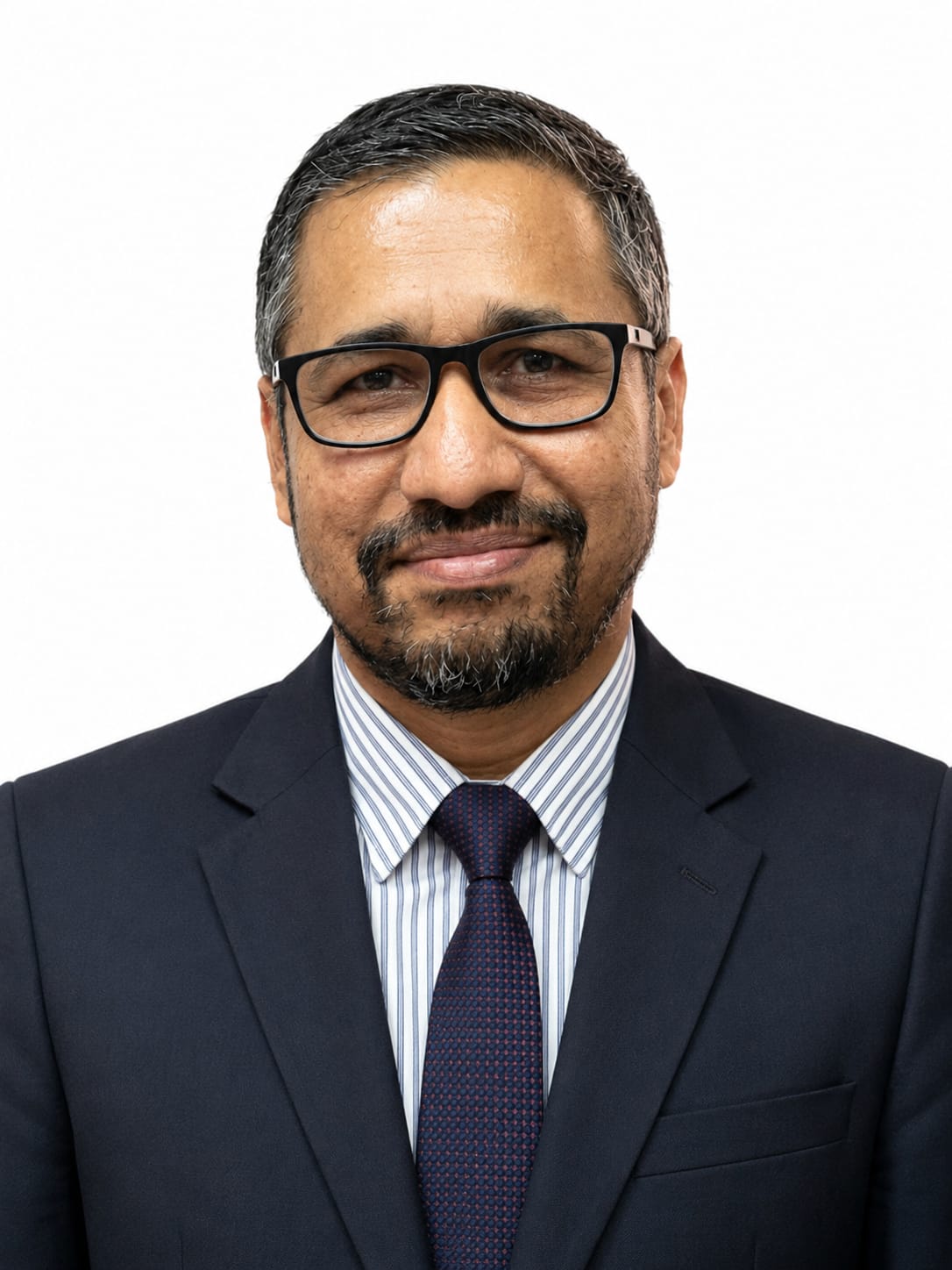
Rakibul Hassan — artificial intelligence and machine learning specialist, author and columnist. He is the first author of machine learning books in the Bangla language (author of more than 11 books including the Rokomari bestseller ‘Hatekolome Machine Learning’, published by Adarsha and Tamralipi). He has also spoken at TEDx on “Proactive Public Services: Government Automation”. In his career he served as Director of the Bangladesh Telecommunication Regulatory Commission (BTRC) and as former Project Director of the Integrated Lawful Interception System (ILIS). He currently works at Link3 Technologies Limited, having moved from Chief Technology Officer (CTO) to Director AI Business and Transformation.
Below are the different facets of his work and platforms:
- Books: more than 11 books (publishers Adarsha, Tamralipi — Rokomari bestsellers) including the ‘Hatekolome Machine Learning’ series, and the AI package in Bangla.
- Video content: more than 600 videos on the YouTube channel YouTube @aiwithr under the banner “Building Intelligent Systems with Rakib”. On his own channel YouTube @raqueebhassan he also makes many more videos — Bangla AI videos, Bangla machine learning videos and more.
- Workshop: ‘Making Machines Work: the Kamla Workshop’ — his extremely popular hands-on workshop on artificial intelligence (AI) and machine learning.
- TEDx: TEDxRUET speaker page.
- News & features: Roar Media profile (2020) — “Machine Learning and a Rakibul Hassan”.
- Social & professional links: LinkedIn, GitHub, Twitter/X, Facebook, WordPress and The Thinking School.
- Print media: some writing in the print media.
Why have I written so many books?
A huge part of my life has gone into plotting ‘data’ — into drawing wisdom out of data. I have added, and keep adding, abundant data to government policy-making processes. And that is where these extraordinary experiences with data happened. I have seen with my own eyes how data can be used in policies for people’s good.
The ‘enlightened economies’ identified data long ago as a ‘strategic asset’, to stay ahead of others. A ‘strategic asset’ — what in Bangla might be called ‘কৌশলগত সম্পত্তি’ (kaushalgato sampotti), the ‘soft’ thing something needs in order to reach excellence. We have plenty of data, but the workforce has not been shaped to draw ‘wisdom’ or ‘insight’ from that data. This site is the first step toward that. The first step of engineering is learning — how to get from point ‘A’ to point ‘B’. My way of teaching the ‘concept’ is a little different. I want you to lose your way on that road and still arrive at point ‘C’. That is where my satisfaction lies.
You can get some idea about me here. The rest you will find here and here.
I am fifty. From ‘connecting the dots’ I have learned a great deal. The creator has given me much, and placed me on very large platforms. The country has not given me less either — starting from that 7th grade. From there I want to return something to the new generation: knowledge, and with it wisdom.
Written in 2014. September 4. Lifted from the blog.
Travelling the world
- The trouble began almost a decade ago. A job of constant movement — here today, there tomorrow. Finally posted as a ‘peacekeeper’ in Congo. Lots of shuttling. Count everything except sleeping time and — it is all on the road. Your area of responsibility, inch by inch, or you are in danger. We are talking about people’s lives. The whole area has to be under your fingernail. Constant vigilance. On foot or by vehicle — the odometer has surely passed a million miles.
Plotting the thoughts
- The moment you hit the road a thousand thoughts crowd the head. One this way, another that way. Thinking without pause. After a few days back at base camp we would sit with the UN’s turtle-paced internet — civilization’s only ‘backward linkage’, that satellite link. Somewhere along the way I started plotting the thoughts. They had to be ‘channelized’ somewhere. One thought, one dot. I understood the ‘connecting the dots’ business much later. Before forty, apparently, it does not come to mind?
The world’s largest telecommunications training facility
- The earlier episode is even more remarkable. Just before going to Congo I had returned from the US Signal School, where I had to stay for a long time. Nearly ninety square miles — the world’s largest telecommunications training facility. The place itself was a strange little village in Georgia. After dark, fireflies. Back from school with no work to do, I took to cooking — the left hand can even manage fast food! This from the PX, that from the PX. At home, a tremendous amount of ‘test and trial’. The catch? The guinea pig was me. I gave up after being sprayed by a smoke detector — a few times. But not entirely: I slowed down, and turned my attention in a new direction.
Inspiration to write: one million words
- A huge library. I would issue this and that, and the time limits were unbearably long. Old newspapers, rare books — all on microfiche. If a brand-new book was not in the library, the librarian would buy it and have it checked out for me. Watching Amazon bestseller lists became a habit in that time. I noticed with surprise: the ‘bestsellers’ were being written by ordinary people like you and me — they were not professional writers. I found courage. Who ever said whatever I write must find readers? Write to feed the mind. From that very ‘99’ — I hear Seth Godin’s voice often. Ship, buddy! Ship! I wrote hundreds of thousands, millions of words. Now I can connect a great many things.
Standing on the Shoulders of Giants
- It turned out some of those ‘bestsellers’ were written by a stock-exchange honcho, a CIA chief, an investment banker, a government official, a Navy SEAL, a football coach, a gymnast. They wrote from the experience of many past years — stories of failure turned into success. Which is exactly what helps those readers make the right decisions. Not writing on controversial things. Written by professionals like Rachel Morahan. Meaning — writing exists on almost every subject. Much has come out into the open. The country is also learning from those mistakes. Countries with the mindset to take criticism are rising fast. And then the founding fathers write. Behind today’s ‘modern’ Singapore there are a few books by the man who was there. You have surely read Nelson Mandela’s book. That the incident of swallowing the hatred of twenty-seven years of injustice in a moment would remain unknown had you not read it. I read everything — I can tell the good from the bad. All of us are moving forward by taking the good and dropping the bad, in the evolution of times. Learning from others. Not by clinging behind.
Reusable knowledge
- Knowledge, however, is reusable. Britain took two hundred years — just learning, from the Industrial Revolution. The United States learned from Britain — sending their people, coming back with notebooks full of experience. By ship. And put it to use, competing with that Britain in far less time. Cut the ‘lead time’ by nearly a hundred years — that United States. Because they kept up that practice of learning, they are still on top. The European Union has stayed afloat amid a hundred calamities through innovation. With fewer people at home they are busy capturing outside markets. Nowadays the talk of war is really about markets — whoever can turn the other into a market wins. ‘Outbound’ cash flow without bloodshed!
There is no ‘poor’ country, they are ‘poorly’ managed.
― Slightly modified
The diffusion of knowledge

- Asian countries are smarter. They learned from Europe and America and put it to work over the last thirty years. Now they compete with everyone. Hong Kong, Korea, Singapore got ahead by using others’ ‘learning-by-example’ experience more. Knowing what worked in the West and what did not — that alone is enough! Mix in the ‘local condition’. I call this ‘ঘুটা’ — the diffusion of knowledge. Mix in a thousand experiences of knowledge. Even a poor country does not forbid its government officials from travelling abroad — and yet in corporate houses, to save money, almost everything now runs on video conferencing. The country asks only this: the knowledge brought back must be used for the country’s progress. Once you have the basic knowledge, the internet is the vehicle for learning the rest. And so the internet matters. Knowledge is spread everywhere; what is needed is its application.
‘Best practices’ — but locally
- From the United States we got knowledge ‘A’. Singapore gave ‘B’, Vietnam brought ‘C’. Now Bangladesh will use whichever fits when matched against our statistical indicators. Many call this ‘best practices’ — meaning what has worked in many places, ‘well tested’, something like a test-paper solution. It turns out that if you work that way, the chance of the thing failing drops. After test and trial it emerged foolproof, and was named ‘best practices’. Twisting best practice into the country’s ‘local condition’ is exactly what Munshiana is about. For seven years I have worked on spreading that kind of ‘template’ through the internet.
Knowledge leapfrogging
- Remember the scientist Newton? ‘If I have seen further than others, it is because I stood on the shoulders of ancestors.’ All of today’s progress in the developed world rests on that ‘standing on the shoulders of giants’. Today I know what a transistor is — and how millions of them sit in one chipset. Rather than reinventing the transistor, what else can be done with a million-transistor chipset is the thing to think about. And so emerging countries are climbing by applying the diffusion of earlier knowledge. This is called leapfrogging.
Learning from data
- I came to BTRC with experience in military spectrum management. Once I used to write about technology in newspapers. Trouble from the start — broadband, the internet: whatever new I wrote, many people shook their heads at.
“Well, but the problem is elsewhere. It is not possible in this country.”
Imagine! I looked at them in surprise. Things were stuck in policy — meaning we were stuck in our own net. Not knowing the paperwork is why we fall behind. The basis of the thousand advantages of being connected is human freedom. It begins with economic freedom; knowledge gives us the assurance of our due. I worked on the big data of social media sitting in an agency. What you see today because of being connected is just the tip of an iceberg. The Arab Spring — a mere symptom. The world is changing, and so will we, for the better. What is needed are tools like the internet.
I want to get many books out of my head
- I write the books partly out of duty. With seven years of BTRC experience in my head, these books are a way to break free of the loop of ruminating. Because notebooks became part of the uniform in the army, I hardly missed them. Jim Rohn’s immortal ‘Never trust your memory’ has barely been able to divert me from ‘note-taking’. Now is the era of Google Keep and Evernote. Elephant memory, they say — nothing falls to the ground. Forums at home and abroad — whether I went or not — I have furnished with information. I snippet whenever I get time. Notebooks were filling up. With voice memos in Evernote and Keep. In point form. The pointers, like programming, were linked in my head. Before I could forget, the books took care of it.
Research outcomes dug out of the ground
- Another problem has chased me since childhood: once I take up something, if I do not see it through, sleep will not come. A huge danger. I used to think the problem was mine alone. The illusion broke watching the world. The industry is the same. Each piece of research lies in the dirt until it succeeds. Remember Henry Ford’s V-8 cylinder? This strategy is used by the defense industry, aerospace, NASA, pharmaceutical research and a host of specialized institutions. Today’s Airbus A380 — the double-decker aircraft — did not arrive so easily. The research of 1988 bore fruit in April 2005 when the aircraft flew. After that, more than two years of thousands of ‘safety tests’ and other trials before Singapore Airlines ran the first commercial flight. Nothing else — it had to fly, so it flew. Someone was stubborn: I could not fund eight or ten flights’ fuel. One flight’s fuel, then, or look at another business. Boeing’s Dreamliner too was made because of a few stubborn people. The creator has emptied man of his knowledge — the rest is our part.
I didn’t fail a thousand times, did I?
- Behind today’s ‘internet’ — which is changing the world — the same strategy was used. To escape expensive circuit switching, the Defense Advanced Research Projects Agency, ‘DARPA’, poured money and time into various universities. The projects ‘failed’ thousands of times, but they did not let go. Thus ARPANET was created, the predecessor of today’s internet. Thomas Edison had to try more than a thousand times to make the light bulb. A reporter wanted to know about his ‘feeling of a thousand failures’. Edison’s reply: I did not fail a thousand times. Rather, it took a thousand steps to make the light bulb.
Specialization, million-dollar consulting
- In telecommunications business, vague work has little use — regulation is the same. Specialization is needed to understand the market. You have to go inside, deep inside. It is entirely economists’ work. If you cannot see the future, surviving in this business is hard. Even the flood of people in telecom companies cannot always go that deep — it is a question of specialization. That is where telecom consulting companies come in. Their work is one thing: R&D, all year round. And that consulting firm does the same kind of work for all telecom companies. Where would they be if they were not specialized? And for that solution nobody talks below a million dollars — and why would they? For that kind of R&D they do not have to work as hard. I have read plenty of reports from these consulting firms. It is not as if they read my palm — you can literally see the future. We are talking million-dollar consulting. Set a target of one crore jobs. I will build the practical formula. It has to happen. You have to know to see the future. Working with big data has let me understand a little of it.
The competence to understand a consulting report
- So not all consulting firms are the same. If you ask me: whoever judges by the work rather than the consultant’s faults — if their competence has a gap, the report can be poor. I am buying the report; if I buy without understanding, what is the gain in blaming the consulting firm? Poor countries do plenty of consultancy, but the trouble is they lack the capacity or knowledge to understand those reports properly. Consultancy done with donor money turns out differently. If you can understand a report as your own, it is worth more than a million dollars. I have understood quite a few such reports — some are post-doc material.
Understanding our own ‘fault lines’
- While working I came to know many world-famous telecom consulting firms — joined by the International Telecommunication Union (ITU), the Commonwealth Telecommunication Organisation (CTO) and many independent consultants. I grasped their way of working, and read thousands more reports. Expensive reports — though some country or agency had already paid for them. I came to know firms like Ovum, Accenture, KPMG, PwC, NERA and Analysis Mason — top of the top. Working at my own organization I also came to know the American firm Telecommunications Management Group, Inc. (TMG). It took time to understand their style — I could not get to the bottom of it at first. We are talking billion-dollar consulting companies. I met many, befriended many. They held my hand and showed me Bangladesh’s ‘fault lines’.
The working style of management consulting firms
- Eventually I got to the bottom of how these management consulting firms work. Because they work around the world, they know well where the problems are — and showing the path out of them is their only job, which they also know ‘impossible’ well. In poor countries, even after making money from management consultancies worth thousands of crores, the blame for failure cannot be laid at their door. In those countries — if those who must ‘understand’ the consultancy let it go, how will it work? For developing countries to climb fast they need consultancy, but people must be able to swallow it bite by bite. If a couple of foreign visits brush it aside, the country loses both knowledge and wisdom.
A business plan for running a country
- The business is largely like buying a business plan. And that made me one. Will I hand over money without understanding? The problem comes when that money is ‘government’ — that is, the people’s money. That is why developed countries are shrinking their governments down. Whatever happens, it is all partnerships. Anyone who has visited Thailand and been amazed by the great infrastructure — most of it built on the PPP model. Governments anywhere do not hold that much money. PPP is public-private partnership. The private company brings the money; the government brings the papers, with a legal basis. A ‘win-win’ affair. The government did not need the money. Employment happened too. Our PPP policy has not had that kind of success.
The ‘infrastructure fund’
- In developed countries people do not wait for the government on very big works — because of PPP. Any country’s development indicator can be read from its public transit system: how easily people can get from one end of the city to the other, within a given time. In Dhaka that situation is worse than in many African countries. And yet, with a business-friendly PPP policy, private asset-management companies could have proposed to the government: build an ‘infrastructure fund’. Divide the whole city into four or five parts. For each part’s route, bid out the concession period — give me this route for fifty years, I will build a sky train, and file a rent chart with the government accounting for inflation.
Project ‘Giving Back’
- As a software person I believe in starting from version zero. You have to start somewhere. Back to Newton: standing on the shoulders of giants — we too must move forward leaning on our predecessors’ experience. Planting trees was something from twenty years ago. If that did not happen, shall I just sit? Rather — I will plant them today. Thanks to working at the agency that ‘connected’ Bangladesh, the poor country invested in me; to return that, I have undertaken an effort — negligible as it is. I have named it Project ‘Giving Back’. Treat it as the cheat code for spreading knowledge from data and ‘broadband’. Taking the ideas of countries successful in broadband, I have tried only to crack the code ‘in our idiom’. And, for money, the infrastructure fund will stand with it. And the SPV. That will be needed too.
Written: 05 September 2014, Sasandra, Ivory Coast
In search of the project “Intelligent Systems”
- Take a small country. If it takes a week there to go from buying land to pulling out the main deed, it takes us much longer. To shorten that time we have to work at scale — at a very large level. Serving 16 crore people, the way processes must be automated: if conventional software works this moment, it will fall behind ahead of it. I say only this — alongside conventional methods, let intelligent systems lend a hand to remove society’s inconsistencies. Intelligent systems will help in government service delivery, in saving time. For example: a needed ‘unified’ health card would help public and private doctors with correct diagnostics and future treatment — with people’s help. We need intelligent systems in all our work.